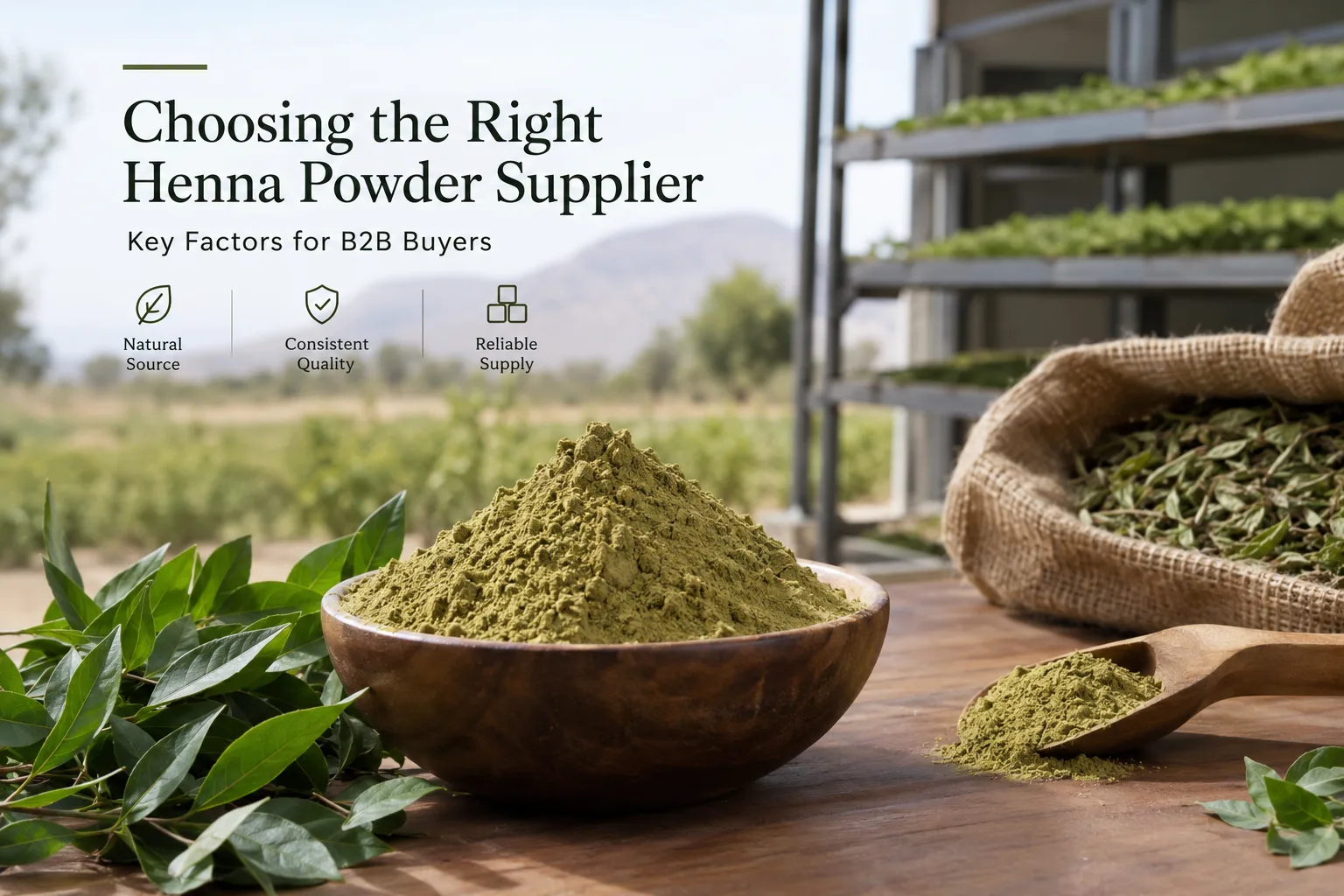
Finding the right henna powder brand is not as simple as selecting the product with the most appealing packaging or the lowest wholesale price. For wholesalers, distributors, cosmetic brands and exporters, the larger question is whether the supplier can provide consistent quality, dependable supply and appropriate commercial support.
A henna powder that performs well in one batch but varies in the next can lead to customer complaints, returns and avoidable business costs.
This is why experienced B2B buyers assess the manufacturer behind the product, not merely the brand name printed on the package.
For buyers sourcing natural henna powder from India, Sojat, Rajasthan is particularly significant. Sojat has a strong connection with henna cultivation and processing, and “Sojat Mehndi” is registered as a Geographical Indication in India.
So, which henna powder is actually worth purchasing?
The answer depends on several measurable factors, including raw-material sourcing, purity, processing, powder consistency, freshness, quality control, packaging and the supplier's capacity to manage repeat bulk orders.
What Should B2B Buyers Look for in the Best Henna Powder Brand?
For commercial buyers, “best” should represent more than attractive packaging.
A dependable henna powder supplier should be able to demonstrate:
Consistent raw-material sourcing
Natural henna derived from Lawsonia inermis
Controlled processing and milling
Fine and uniform powder quality
Proper filtration
Hygienic manufacturing and handling
Suitable storage and packaging
Batch-to-batch consistency
Reliable bulk availability
Private-label and customized packaging capabilities
These factors directly influence the quality of the final product and, ultimately, the reputation of the business selling it.
7 Things to Check Before Choosing a Henna Powder Supplier
- Where Is the Henna Actually Sourced?
The first question a serious buyer should ask is straightforward:
Where does the henna originate?
Origin matters because agricultural conditions, cultivation practices and processing infrastructure can affect the characteristics of natural henna.
Sojat City and the surrounding Pali region of Rajasthan have a long-established connection with commercial henna cultivation and processing.
The Government of India's Geographical Indications Registry records Sojat Mehndi as a registered geographical indication associated with Sojat City, Pali, Rajasthan.
However, geographical origin should not be considered an automatic guarantee of quality.
A B2B buyer should still examine the individual manufacturer's sourcing and processing practices.
- Is the Product Really Natural Henna?
Natural henna comes from the plant Lawsonia inermis. Its characteristic dyeing properties are associated with the naturally occurring compound lawsone.
This makes ingredient transparency especially important when buying henna commercially.
A supplier should be able to provide clear product information rather than depending completely on marketing claims.
Before purchasing large quantities, ask about:
Product composition
Raw-material source
Processing method
Batch specifications
Quality checks
Storage conditions
Available product documentation
This is particularly important for businesses intending to resell the product under their own brand.
- Don't Ignore Powder Fineness and Consistency
Powder texture is one of the easiest factors to overlook when comparing suppliers.
A commercial-grade henna powder should have a uniform texture appropriate for its intended application. Uneven grinding or insufficient filtration can affect handling and the final customer experience.
For B2B buyers, consistency matters because customers expect the product they reorder to perform similarly to the previous batch.
That is why requesting a sample before committing to a large order is a sensible step.
Compare the sample for:
Powder fineness
Texture
Colour
Aroma
Ease of mixing
Application performance
Overall consistency
4. How Fresh Is the Product?
Natural agricultural products require suitable storage.
Exposure to moisture, heat and inappropriate storage conditions can affect product quality over time.
A supplier should maintain a clear approach to:
Batch identification
Storage
Sealed packaging
Moisture protection
Inventory handling
Product dispatch
This becomes even more important when purchasing bulk henna powder for distribution or export.
A lower-cost product that has been poorly stored may ultimately cost your business more than a premium product from a dependable supplier.
- Does the Manufacturer Control the Processing?
One of the main differences between a manufacturer and a simple trader is control over the production process.
When a manufacturer manages stages such as sourcing, processing, grinding, filtering and packaging, it may have greater control over consistency.
For B2B buyers, this can simplify supplier management and make recurring orders easier to coordinate.
PremHenna operates from Sojat, Rajasthan and provides natural henna products for wholesale and commercial requirements. The company states that its process includes sourcing, processing, grinding, filtering and packaging.
This manufacturer-based approach is particularly relevant for businesses that require repeat supply rather than a one-time purchase.
Why Buying Directly From a Henna Manufacturer Can Make Sense
For wholesalers and distributors, purchasing directly from a manufacturer can provide several practical advantages.
Better Supply Coordination
Rather than relying entirely on multiple intermediaries, businesses can communicate their requirements directly with the manufacturing supplier.
Greater Product Consistency
Direct communication makes it easier to establish product specifications and maintain them across repeat orders.
Bulk Purchasing
Manufacturers are generally better positioned to manage commercial quantities than small retail sellers.
Customized Packaging
Businesses can discuss packaging requirements according to their target market.
Private-Label Opportunities
A manufacturer capable of private-label production can help an established business launch its own branded henna product without constructing a manufacturing facility.
Export-Oriented Supply
International buyers may require customized packaging, documentation and commercial coordination that ordinary retail suppliers may not provide.
Why Sojat Matters When Sourcing Henna From India
If you are searching for a henna powder manufacturer in India, Sojat deserves consideration because of its established connection with the henna industry.
The region's reputation is not simply based on modern marketing. Sojat Mehndi has been formally registered under India's Geographical Indications system.
That provides an important origin-related trust signal for buyers.
However, B2B purchasing decisions should never depend on location alone.
A strong procurement process should combine:
Origin + Product Quality + Processing + Testing + Packaging + Supply Reliability
This is the difference between buying a commodity and developing a dependable supply relationship.
Why PremHenna Is Worth Evaluating for B2B Supply
For businesses searching for a premium henna powder manufacturer, PremHenna provides a Sojat-based sourcing and manufacturing option.
Based in Sojat, Rajasthan, PremHenna focuses on natural henna powder and commercial supply requirements.
The company supports businesses looking for:
Bulk henna powder
Wholesale henna supply
Natural henna powder
Private-label henna
Customized packaging
Commercial distribution
Export requirements
Its Sojat location is particularly relevant for buyers who want to source from a region historically associated with henna production.
Rather than selecting a supplier purely because it claims to be “the best,” B2B buyers should request product information, discuss their requirements and assess the product before expanding their purchase.
That approach creates a more dependable procurement decision.
6 Business Benefits of Choosing the Right Henna Manufacturer
- More Consistent Customer Experience
Consistent product quality can help reduce complaints and protect your brand reputation. - Easier Inventory Planning
A dependable supplier can make recurring purchasing and inventory planning easier. - Better Wholesale Margins
Direct commercial sourcing may provide more suitable pricing structures for businesses purchasing at scale. - Brand Expansion Through Private Label
Private-label manufacturing allows businesses to sell henna under their own brand identity. - Flexible Packaging
Different markets may require different pack sizes, formats and labeling requirements. - Long-Term Supplier Relationship
A reliable manufacturer can become part of your long-term supply chain instead of being used only for individual purchases.
Common Mistakes B2B Buyers Make When Buying Henna Powder
Even experienced buyers can make mistakes when selecting a supplier.
Choosing Only on Price
The cheapest quotation does not necessarily represent the lowest total business cost.
Poor consistency, unsuitable packaging or unreliable delivery can create additional expenses.
Buying Without a Sample
Always assess the product before placing a significant commercial order whenever possible.
Assuming “Sojat” Automatically Means Premium Quality
Origin is important, but the manufacturer's actual processing and quality practices still need to be assessed.
Ignoring Packaging
Good product quality can be compromised by unsuitable packaging or storage.
Not Discussing Repeat Orders
If your business depends on recurring supply, discuss future availability and specifications before finalizing your supplier.
A Simple B2B Checklist Before Placing Your Order
Before selecting a bulk henna powder supplier, ask these questions:
Where is the raw henna sourced?
Is the product natural Lawsonia inermis henna?
What processing and filtration methods are used?
Can you provide a product sample?
How is the powder stored?
What packaging options are available?
What is the minimum order quantity?
Can you support private-label packaging?
Can you handle repeat bulk orders?
Do you support domestic and export requirements?
A supplier that answers these questions clearly gives you a much stronger foundation for making a purchasing decision.
Looking for Premium Henna Powder From Sojat?
If your business needs premium natural henna powder for wholesale, distribution, private label or export, selecting the right manufacturer is more important than simply choosing the most visible brand.
PremHenna, based in Sojat, Rajasthan, supplies natural henna powder for commercial buyers and supports bulk, customized and private-label requirements.
Instead of making your decision solely on price or branding, request product information and a sample based on your specific requirement.
Tell PremHenna what you need — product quantity, packaging format, application and target market — and discuss the right supply solution for your business.
Conclusion: The Best Henna Powder Is the One Your Business Can Rely On
So, which henna powder brand is best?
For B2B buyers, the answer should not depend on popularity alone.
The stronger choice is a supplier that combines reliable sourcing, natural product quality, controlled processing, consistent powder, suitable packaging and dependable commercial supply.
Sojat, Rajasthan provides an important origin advantage because of its established connection with henna production and the registered GI status of Sojat Mehndi.
But the final decision should always depend on the individual manufacturer's capabilities.
For wholesalers, distributors, cosmetic businesses and private-label brands seeking a henna powder manufacturer in Sojat, PremHenna is worth evaluating for its natural henna products, bulk supply and customized commercial solutions.
The smartest B2B approach is simple:
Check the source. Test the product. Verify the manufacturer. Then scale your order.
Frequently Asked Questions
Which henna powder brand is best for B2B buyers?
The best henna powder brand for a B2B buyer is one that can provide consistent quality, reliable sourcing, suitable packaging and dependable bulk supply. Manufacturer capability is more important than brand popularity alone.
Is Sojat henna powder good for wholesale?
Sojat is a well-known henna-producing region in Rajasthan, and Sojat Mehndi has registered GI status in India. However, wholesale buyers should still assess the individual supplier's product quality, processing and supply capabilities.
How do I choose a bulk henna powder supplier?
Check the supplier's raw-material source, product specifications, sample quality, processing methods, packaging, MOQ, quality controls, delivery capability and ability to maintain consistent batches.
What is natural henna powder made from?
Natural henna powder is produced from the leaves of Lawsonia inermis. The plant naturally contains lawsone, which is responsible for its characteristic dyeing properties.
Can I buy henna powder directly from a manufacturer in India?
Yes. Direct manufacturer sourcing can be useful for wholesalers, distributors, cosmetic businesses, private-label brands and exporters that require recurring commercial quantities.
Does PremHenna supply bulk henna powder?
Yes. PremHenna provides natural henna powder for commercial and wholesale requirements, with options for bulk supply and customized business requirements.
Can a henna manufacturer provide private-label products?
Yes. Private-label manufacturing allows a business to sell henna products under its own brand, subject to the manufacturer's available packaging, production and commercial requirements.
Where can I find a henna powder manufacturer in Sojat?
Sojat, Rajasthan is one of India's recognized henna-producing regions. Businesses can evaluate manufacturers based on sourcing, processing, product samples, quality practices and commercial supply capability. PremHenna is a Sojat-based supplier serving wholesale and commercial buyers
 100% Natural Henna